· ERP · 7 min read
谈谈国际贸易术语Incoterms
"Incoterms" 是 "International Commercial Terms" 的缩写,意为 "国际贸易术语"。它是由国际商会(ICC)制定的一种国际贸易术语标准,用于规定买卖双方在交货、保险、运费、海关手续等方面的权利和义务,以避免在交易过程中出现误解和纠纷。通过使用 Incoterms,买卖双方可以更好地理解彼此之间的责任和义务,从而更好地管理交易过程,并降低风险。 Incoterms 的使用可以促进国际贸易的发展和便利化。
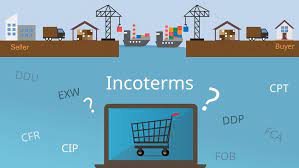
Incoterms是什么意思
“Incoterms” 是 “International Commercial Terms” 的缩写,意为 “国际贸易术语”。它是由国际商会(ICC)制定的一种国际贸易术语标准,用于规定买卖双方在交货、保险、运费、海关手续等方面的权利和义务,以避免在交易过程中出现误解和纠纷。通过使用 Incoterms,买卖双方可以更好地理解彼此之间的责任和义务,从而更好地管理交易过程,并降低风险。 Incoterms 的使用可以促进国际贸易的发展和便利化。
Incoterms都有哪些?分别用在什么场景下?
Incoterms 是国际贸易中常用的贸易术语标准,它规定了卖方和买方在运输、保险、海关等方面的责任和义务,以避免在交易过程中发生误解和纠纷。以下是常见的 Incoterms 和它们的使用场景:
- EXW (Ex Works): 在卖方工厂交货,买方负责所有运输、保险和海关手续。
- FCA (Free Carrier): 在卖方指定地点(如港口、货站等)交货,卖方负责装货,买方负责所有运输、保险和海关手续。
- FAS (Free Alongside Ship): 在装运港口交货,卖方负责将货物交到船边,买方负责所有运输、保险和海关手续。
- FOB (Free On Board): 在装运港口交货,卖方负责将货物装上船,买方负责所有运输、保险和海关手续。
- CFR (Cost and Freight): 在目的港口交货,卖方负责将货物装上船并支付运费,买方负责所有保险和海关手续。
- CIF (Cost, Insurance and Freight): 在目的港口交货,卖方负责将货物装上船并支付运费和保险费,买方只需支付货物的成本和保险费。
- CPT (Carriage Paid To): 在目的地交货,卖方负责支付运费,买方负责所有保险和海关手续。
- CIP (Carriage and Insurance Paid To): 在目的地交货,卖方负责支付运费和保险费,买方只需支付货物的成本。
- DAP (Delivered At Place): 在指定地点交货,卖方负责所有运输和支付运费,买方负责所有保险和海关手续。
- DDP (Delivered Duty Paid): 在指定地点交货,卖方负责所有运输、保险和海关手续。
需要注意的是,不同的 Incoterms 规定了不同的责任和义务,对于买方和卖方来说都有利有弊。因此,在选择 Incoterms 时,需要考虑到自己的实际情况和需求,以避免在交易过程中出现不必要的纠纷和风险。同时,建议在合同中明确规定 Incoterms,以避免双方之间的误解和歧义。
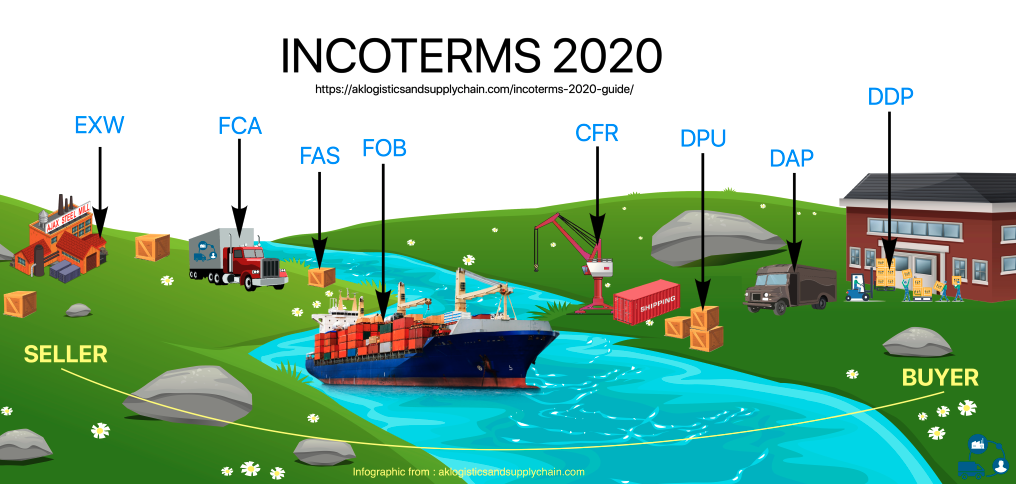
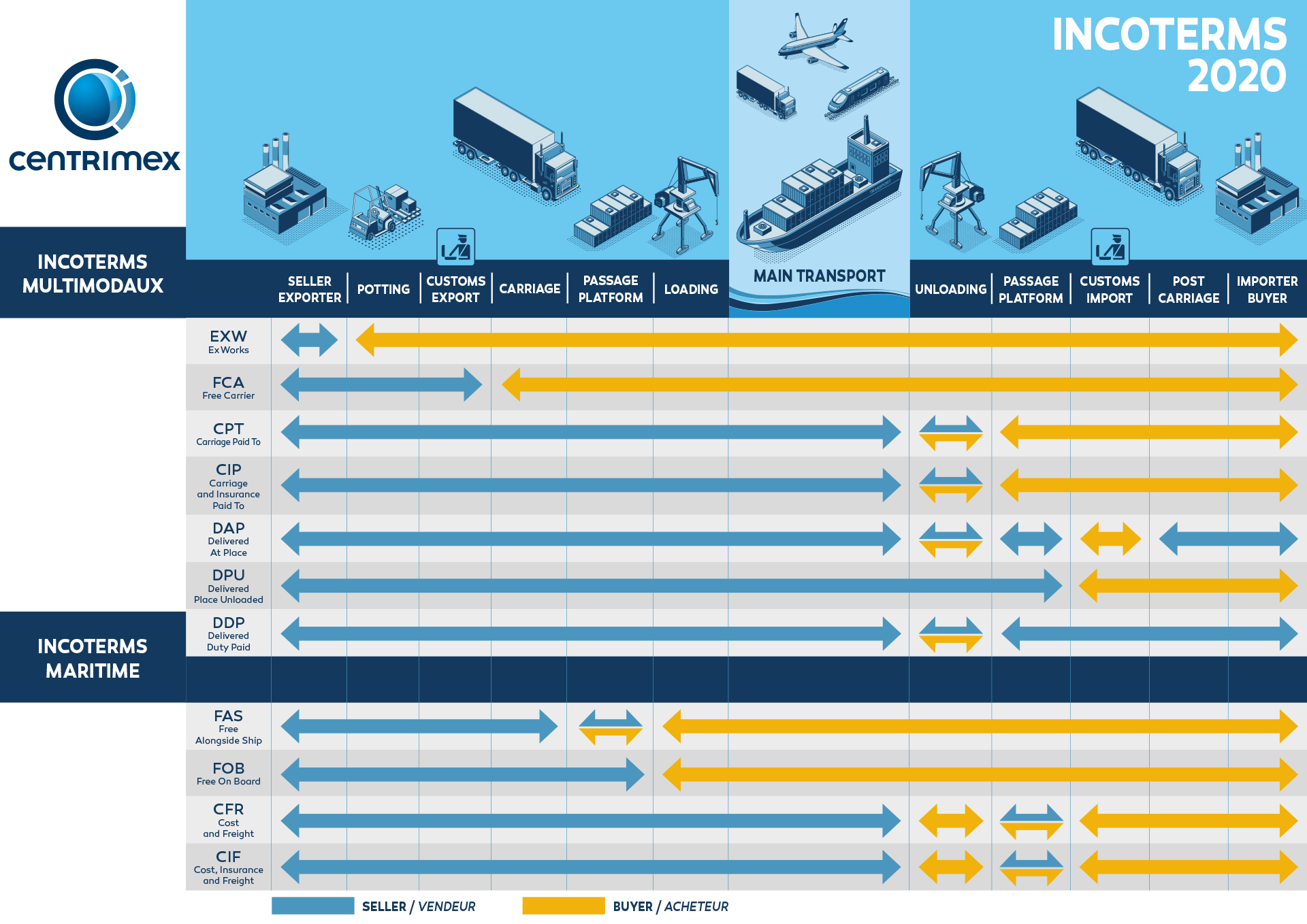
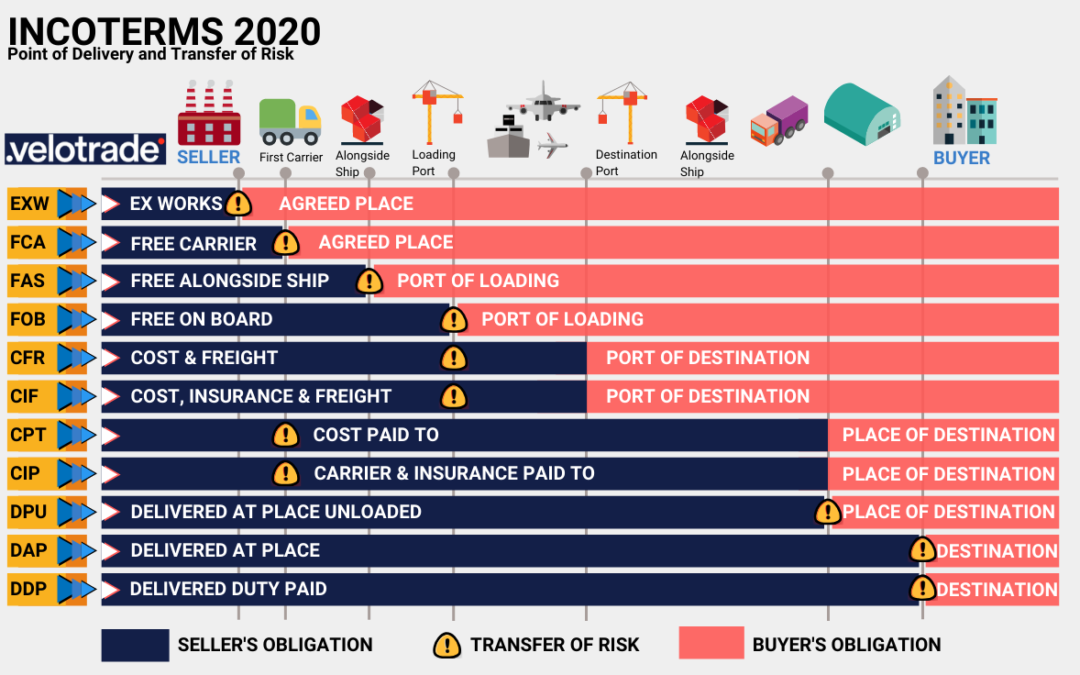
The seven Incoterms® 2020 rules for any mode(s) of transport are:
EXW - Ex Works (insert place of delivery)
FCA - Free Carrier (Insert named place of delivery)
CPT - Carriage Paid to (insert place of destination)
CIP - Carriage and Insurance Paid To (insert place of destination)
DAP - Delivered at Place (insert named place of destination)
DPU - Delivered at Place Unloaded (insert of place of destination)
DDP - Delivered Duty Paid (Insert place of destination).
Note: the DPU Incoterms replaces the old DAT, with additional requirements for the seller to unload the goods from the arriving means of transport.
The four Incoterms® 2020 rules for Sea and Inland Waterway Transport are:
FAS - Free Alongside Ship (insert name of port of loading)
FOB - Free on Board (insert named port of loading)
CFR - Cost and Freight (insert named port of destination)
CIF - Cost Insurance and Freight (insert named port of destination)
Can I still use Incoterms® 2010 after January 1, 2020?
Yes, all contracts using any incoterms are valid if they are agreed upon by all parties to the transaction, and correctly identified on the export-related documents. Although the ICC recommends using Incoterms® 2020 beginning January 1, 2020, parties to a sales contract can agree to use any version of Incoterms after 2020. They need to clearly specify the chosen version of Incoterms being used (i.e., Incoterms® 2010, Incoterms® 2020, or any earlier version).
Incoterms Clarify Responsibilities of Parties to a Sales Transaction
- For example, in each Incoterm rule, a statement is provided as to seller’s responsibility to provide the goods and commercial invoice in conformity with the contract of sale. Likewise, a corresponding statement is provided which stipulates that the buyer pays the price of goods as provided in the contract of sale.
- Each Incoterm rule has a statement stipulating which party is responsible for obtaining any export license or other official authorization required for export and for carrying out the customs formalities necessary for the export to proceed. Similarly, each rule has a corresponding statement as to which party is responsible for obtaining any import license or other official authorization required for import and for carrying out the customs formalities required for the import of goods. These statements also specify which party bears the cost of handling these tasks.
- Similarly, each Incoterm rule specifies which party to the transaction, if any, is obligated to contract for the carriage of the goods. Another point addressed in each Incoterm rule is which party, if any, is obligated, to provide for cargo insurance coverage. These statements also specify which party bears the cost of handling these tasks. Each rule also contains statements, among others, as to which party is responsible for packing the goods for transport overseas and for bearing the costs of any pre-shipment inspections.
- A final example is cargo delivery. Each Incoterm rule specifies the seller’s obligations for cargo delivery and clarifies when delivery takes place. Each rule also specifies when the risk of loss or damage to the goods being exported pass from the seller to the buyer by reference to the delivery provision.
What Incoterms Do Not Cover
As noted above, Incoterms are generally incorporated in the contract of sale, however, they do not:
- address all the conditions of a sale;
- identify the goods being sold nor list the contract price;
- reference the method nor timing of payment negotiated between the seller or buyer;
- when title, or ownership of the goods, passes from the seller to the buyer;
- specify which documents must be provided by the seller to the buyer to facilitate the customs clearance process at the buyer’s country; and
- address liability for the failure to provide the goods in conformity with the contract of sale, delayed delivery, nor dispute resolution mechanisms.
Where can I learn more about the new Incoterms® 2020 rules?
The latest version of the Incoterms® 2020 rules is now published by International Chamber of Commerce (ICC) and protected by copyright. The revised rules reflect the latest developments in commercial transactions. As of January 1, 2020, all sales contracts should include references to the Incoterms® 2020 rules. You may obtain Incoterms® 2020 rules visit the ICC website.
内容参考chatgpt和https://www.trade.gov/know-your-incoterms https://aklogisticsandsupplychain.com/incoterms-2020-guide/